
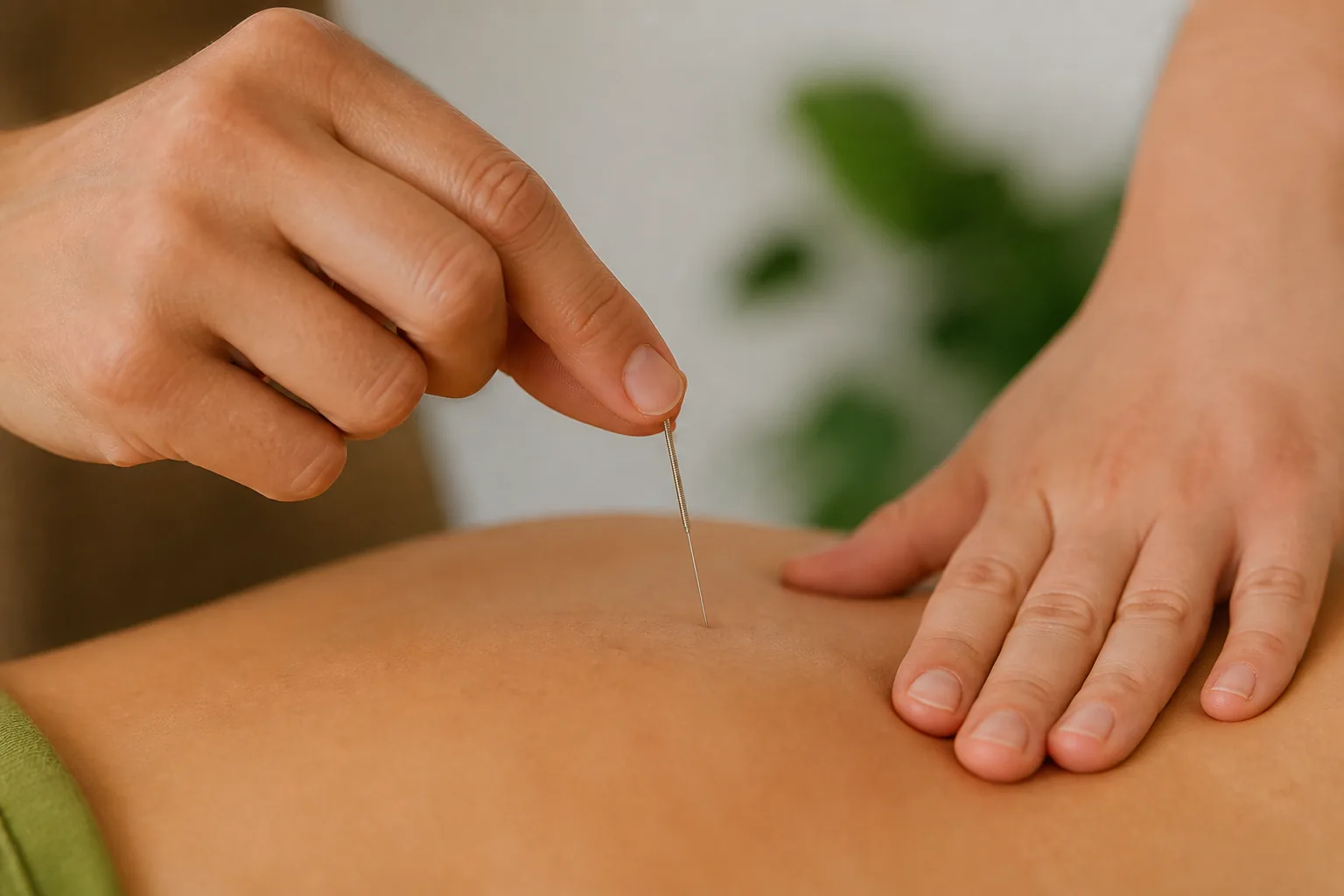
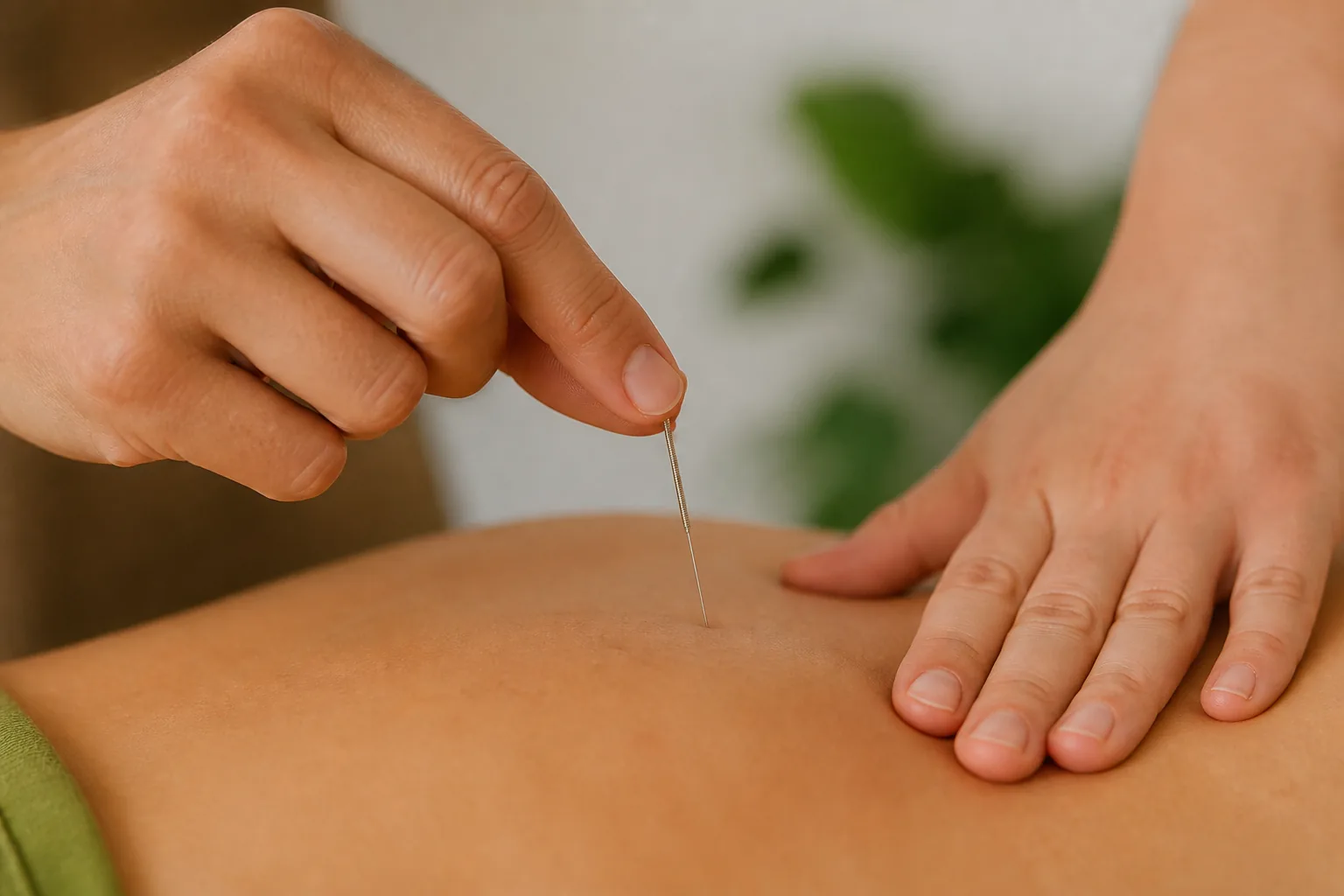
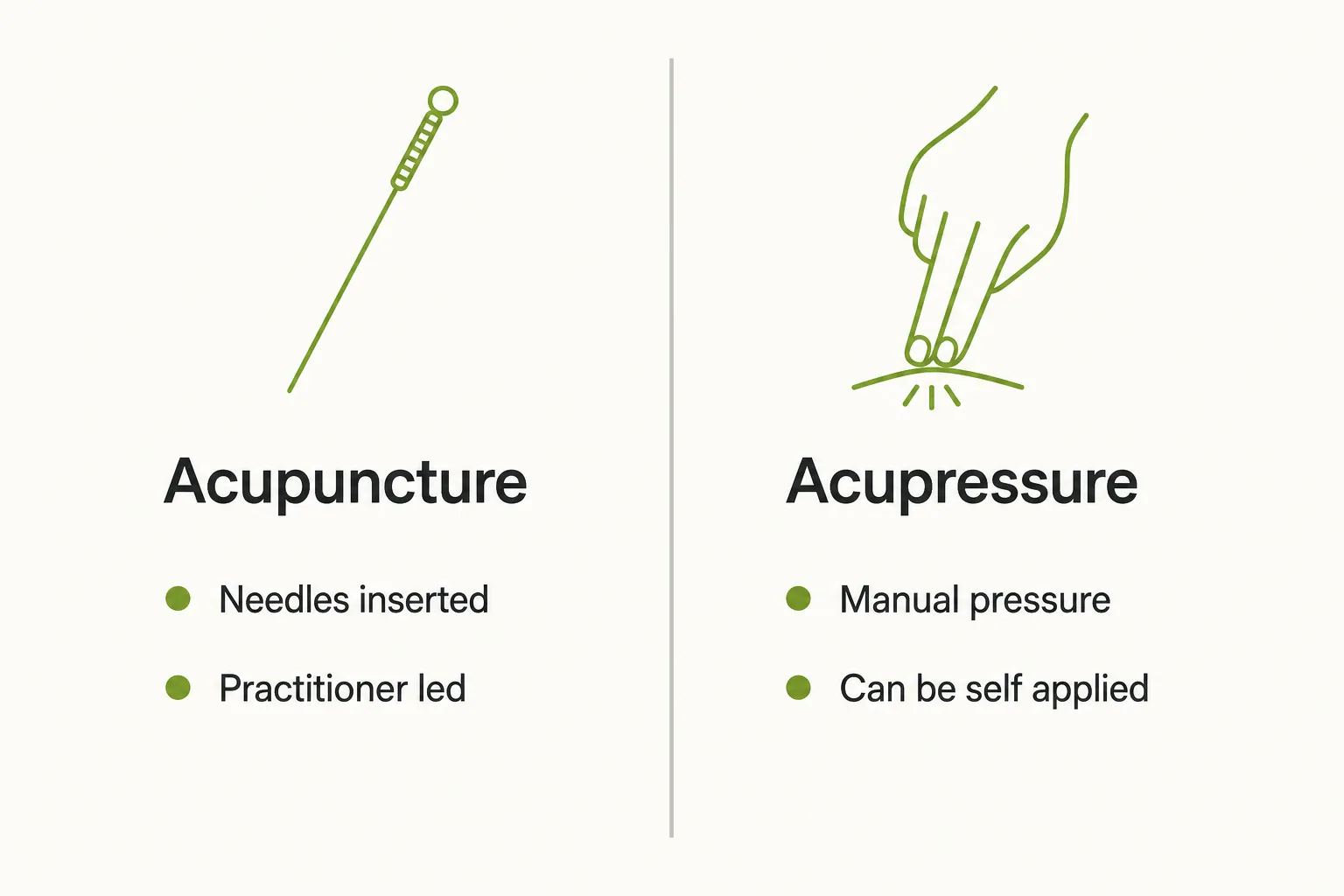
The short answer to acupuncture versus acupressure is that both work with the same map of points on the body, but they stimulate those points in very different ways. Acupuncture involves a trained practitioner inserting fine, sterile needles at selected points, while acupressure applies manual pressure to points on the surface of the body, usually with the fingers, hands or simple tools, and it can sometimes be taught for use at home or applied by another person.
That difference matters more than it first appears, because it changes who provides the treatment, how it feels, what the research has looked at, and where each one might sensibly fit. Neither should be presented as a universal remedy. What follows is a comparison to help you weigh up needle preference, self-care needs, what the evidence can reasonably suggest, and the safety questions worth raising before you start.
Acupuncture vs acupressure: what actually differs
Traditional Chinese Medicine describes a network of specific points located along channels running through the body, and both approaches select from that same network. Acupuncture stimulates those points by inserting very fine needles through the skin, a procedure carried out by a trained practitioner who chooses the points based on an assessment. Acupressure stimulates the same or similar points from the outside, using sustained or rhythmic pressure, so the skin is never pierced.
This is why it is a little misleading to think of acupressure as simply acupuncture without needles. The depth and type of stimulation differ, the person delivering it may differ, and so does the setting, since acupressure can be applied at home or between appointments in a way that needling cannot. Sources comparing the two describe acupuncture as generally the more targeted, clinical approach and acupressure as the gentler and more accessible one, which is a fair summary as long as "gentler" is not read as "a weaker version of the same thing".
How the experience differs for the person receiving it
The most obvious practical difference is invasiveness. Acupuncture is minimally invasive, since the needles pass through the skin, and it is described in the sources as feeling like a mild tingling, warmth or dull ache at the point, whereas acupressure is non-invasive and is more often described as a firm, massage-like pressure. Neither should be assumed to be entirely without risk, but the risk profiles clearly differ.
Acupuncture is also practitioner-led by nature, since it normally involves an assessment and a considered choice of points, which suits someone who wants guided care and a professional view of their symptoms rather than a technique they manage themselves. Acupressure is more flexible: it may be delivered by a trained practitioner, applied by another person, or taught as simple self-care, and for those who prefer a hands-on approach without needles, traditional Chinese massage therapy offers a similar level of practitioner guidance while still relying on pressure rather than penetration. Flexibility is not the same as being suitable for everything, though, and a symptom that warrants assessment still warrants assessment.
Needle aversion is a legitimate deciding factor rather than a squeamish afterthought. If the thought of needles is enough to stop you attending, or to keep you tense throughout, acupressure may simply be the more acceptable option; if needles do not trouble you and you would like a practitioner-led approach, acupuncture may be the better fit. In broad terms, acupuncture is more often considered a practitioner-led treatment in its own right, while acupressure tends to sit better as supportive or adjunctive care.
What the evidence can and cannot suggest
Research on both approaches is encouraging in places and limited in others, and it does not support blanket claims that either one works for every condition or every person. Acupuncture has been the more extensively studied of the two, particularly for certain pain and symptom-related concerns, and sources comparing the two note that acupuncture for pain relief is often the approach considered for chronic or deeper-seated pain, where the needling is thought to stimulate nerves, muscle and connective tissue. Even there, the strength of the evidence varies considerably by condition, by how a study was designed and by what the treatment was compared against.
Acupressure has been explored in narrower areas, including nausea, stress, tension, headaches, fatigue and digestive discomfort, and clinical sources on digestive complaints discuss both approaches as options worth considering alongside conventional care. That body of work is better described as emerging and condition-specific than as proof of broad effectiveness. People who use acupressure regularly do report relief from mild pain and tension, and that reported experience is worth taking seriously without being mistaken for trial evidence.
For your decision, the practical upshot is that acupuncture may have more research behind it for certain concerns, particularly persistent pain, while acupressure may appeal where lower invasiveness and the ability to use something at home matter most. More clinical research is still needed before firm conclusions can be drawn about either approach in managing pain and other symptoms.
Is acupressure as effective as acupuncture?
Not in any simple, general sense, and the honest answer is that it depends: on the condition, on the outcome being measured, on how the pressure is applied and by whom, and on the quality of the studies available for that particular concern. The evidence should not be read as showing straightforward equivalence in either direction.
Part of the reason is mechanical, because sharing a point map does not mean delivering the same stimulation. Inserted needles and external finger pressure may produce different sensory and physiological effects, and one commonly cited view is that needling can reach deeper tissue layers than pressure applied to the surface. Acupressure may therefore be better framed as a lower-invasive support option than as a guaranteed substitute, especially where symptoms are persistent, complex or clinically significant.
Acceptability still counts, though. A less invasive technique that someone will genuinely use, perhaps for everyday tension or stress, may be practically valuable even where the research does not show equivalence. This need not be an either/or choice either: some people use acupressure between practitioner appointments alongside other care, which is reasonable enough as a supportive measure, though it is worth discussing with a relevant health professional if your health picture is complicated.
Choosing between them, and when to get advice first
Acupuncture may suit you if you want a practitioner to assess your situation and select points accordingly, you are comfortable with needles, and your concern is one of the pain or symptom areas where acupuncture has been more extensively studied. If this sounds like your situation, our acupuncture treatments (https://www.tcmcentre.com.au/services/acupuncture) are designed around exactly this kind of tailored, practitioner-led approach. Acupressure may suit you if needles are a barrier, if you want simple techniques you can use yourself, or if you are looking for supportive symptom management between appointments, provided the concern is genuinely appropriate for self-care.
Before relying on either, seek medical assessment for anything significant, persistent, worsening or unexplained, since point-based therapies are best considered as complementary to conventional care rather than a way of avoiding a diagnosis. There are also clear limits on where pressure should be applied: avoid wounds, inflamed or broken skin, acute injuries, suspected fractures, and any area of unusual or sharp pain. If pressure obviously does not belong there, do not apply it.
Some circumstances warrant professional advice before starting either approach, including pregnancy, bleeding disorders, use of anticoagulant (blood-thinning) medication, a compromised immune system, complex medical conditions, or simple uncertainty about what is causing your symptoms. An initial consultation is the appropriate place to raise any of these.
A workable decision rule, then, is to let the nature of the symptom lead: if it needs professional assessment, start there. Beyond that, weigh your comfort with needles, what the evidence suggests for your particular concern, whether you want something you can use at home, and your own safety context. Neither approach is simply better than the other; they are suited to different situations.