

Evidence suggests that acupuncture for lower back pain can provide modest, clinically meaningful relief for some people, particularly those who have not found sufficient help from standard treatments alone. It may not be a cure, and it does not work equally well for everyone. What the research does support is that it can be a reasonable addition to a broader pain management plan, rather than a replacement for it.
This article sets out what the current evidence shows, what a typical course of treatment involves, what risks are worth knowing about, and how to think through whether it is worth trying alongside other care.
What acupuncture is and how it may influence pain
Acupuncture involves the insertion of very fine needles into specific points on the body, known as acupoints, which in traditional Chinese medicine are thought to lie along channels called meridians. The needles are believed to influence the flow of qi (pronounced 'chee'), a concept roughly translated as vital energy.
From a biomedical perspective, needle stimulation may trigger the release of endorphins, the body's own pain-relieving chemicals, and evidence suggests it may also alter activity in brain regions involved in pain processing and affect neurotransmitter levels, including serotonin, which is linked to both pain and mood.
What does the research say about acupuncture for chronic low back pain?
A large study found that acupuncture was more effective than usual care alone for helping people with chronic low back pain feel less bothered by their symptoms and function better in daily activities.
Another large clinical trial in adults aged 65 and older, involving around 800 participants, reported that groups receiving acupuncture experienced less pain interfering with daily life, lower overall pain intensity, better mobility, and less anxiety than those receiving only physical therapy and medication.
A pooled analysis of 39 studies involving nearly 21,000 participants, published in the Journal of Pain, found that acupuncture provided greater pain relief than both simulated acupuncture and no treatment for chronic back, neck, and shoulder pain, with benefits persisting for at least a year. A further study suggested that relief may last up to two years for some patients.
Taken together, the evidence points to small-to-moderate average improvements in pain and function. Some people experience more marked benefit; others see little or no change. Major clinical guidelines generally position acupuncture as an option to consider rather than a first-line, stand-alone treatment.
The available evidence is broadly positive but comes with important caveats. Although more clinical studies and research are needed to provide substantial evidence of the effects of acupuncture and Chinese medicine in managing chronic lower back pain, many patients do report improvements after treatment.
What to expect from a course of acupuncture for lower back pain
A first appointment typically begins with a detailed discussion covering your pain history, other symptoms, medical conditions, and current medications, and may also touch on sleep, digestion, and mood.
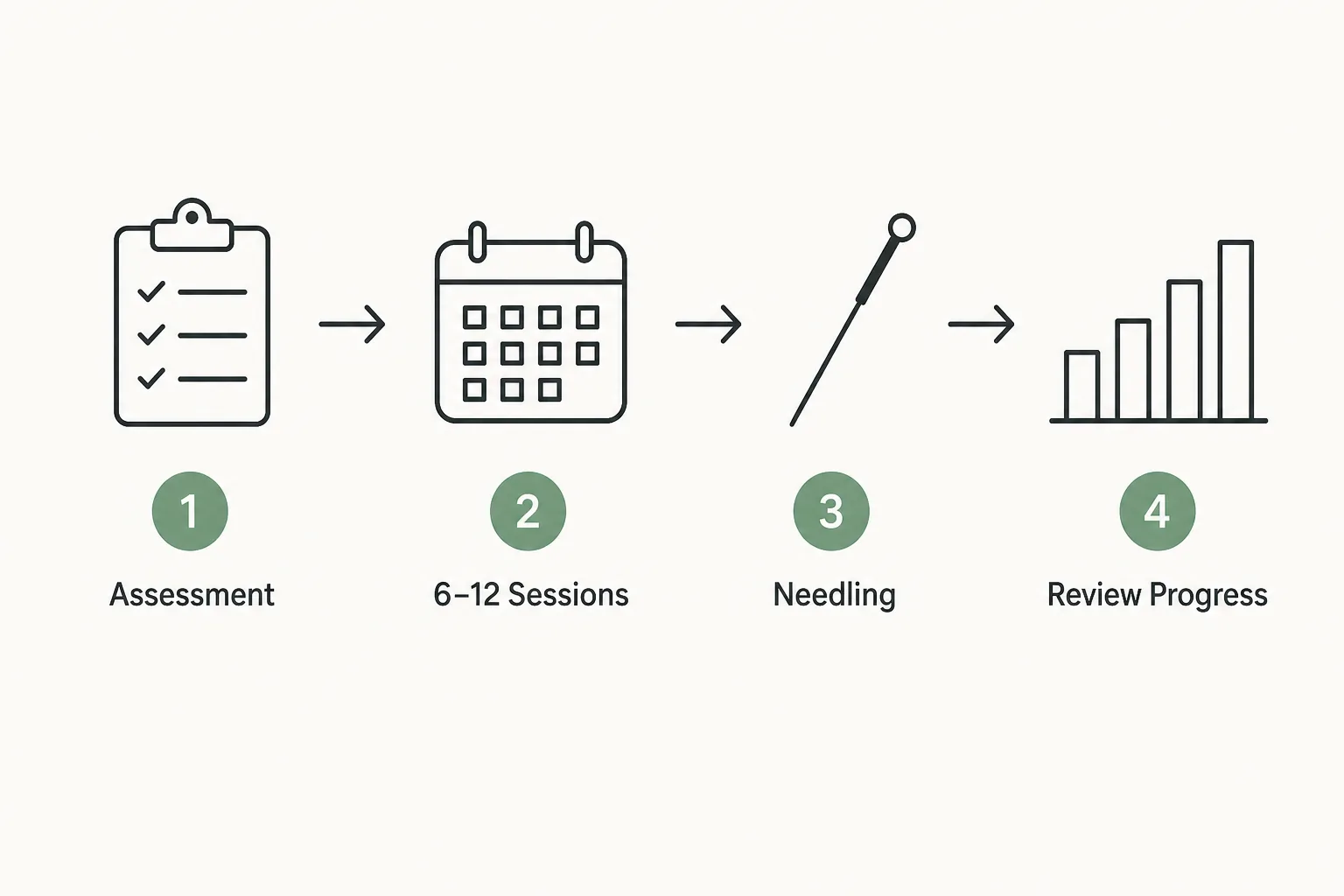
A standard course commonly involves six to twelve sessions over several weeks to three months. In each session, between four and ten fine, sterile, single-use needles are inserted and left in place for around ten to thirty minutes. Points may be placed on the lower back but also on the legs or hands depending on the practitioner's assessment. Full sessions generally run for 30 to 40 minutes.
The sensations are usually mild: a brief sting on insertion, often followed by a dull, heavy, or warm feeling that typically settles quickly.
Progress is tracked by rating pain intensity, impact on sleep and daily activities, and any changes in medication use. Some people notice a significant improvement after a few sessions; others require more. It is worth agreeing with your practitioner on a defined trial, for example a set number of sessions, after which you review together whether the degree of change justifies continuing.
Safety, side effects and who should approach acupuncture with caution
In trained hands, acupuncture has a relatively low complication rate. The most common side effects are minor and short-lived: brief discomfort, small bruises, or light bleeding at needle sites, and occasionally mild skin irritation. Serious complications are rare but can occur if technique is poor or sterile precautions are not followed. The widespread adoption of single-use, pre-packaged sterile needles has greatly reduced the risk of blood-borne infections.
Certain groups should discuss risks in detail with both their doctor and acupuncturist before proceeding. People with bleeding disorders or those taking blood-thinning medication may have a higher risk of bruising or bleeding. Those with uncontrolled epilepsy, certain heart rhythm conditions, or implanted electronic devices such as some pacemakers should seek specific medical advice first. Acupuncture is generally not appropriate where there is an active infection at or near the proposed needle sites.
Verify that your practitioner is appropriately trained and regulated, uses only single-use sterile needles, and is willing to communicate with your GP or relevant specialist. Inform your GP or specialist before starting, particularly if you have a chronic illness, are pregnant, or are considering changing your medication in response to how acupuncture goes.
How acupuncture fits into a broader plan for managing chronic lower back pain
The strongest evidence for acupuncture comes from studies where it was used alongside other established treatments such as physical therapy and medication, rather than as a replacement for them. This may position acupuncture as one component of a wider management plan rather than a stand-alone solution.
Other non-pharmacological strategies, including yoga, mindfulness-based stress reduction, and cognitive behavioural therapy, can also help relieve or prevent low back pain. Combining several evidence-based approaches that address both the physical and psychological dimensions of chronic pain is likely to be more effective than relying on any single treatment.
A realistic role for acupuncture might be to reduce pain enough to allow greater participation in physiotherapy or exercise, to improve sleep, or to reduce reliance on some pain medicines. It may not be able to eliminate chronic pain entirely for most people. Decisions about when to introduce it are best made in consultation with a GP, pain clinic, or multidisciplinary team, and continuing beneficial exercise or psychological support alongside acupuncture is sensible rather than pausing those approaches.
How to decide whether to try acupuncture, and what to watch for
Acupuncture is a reasonable option to consider if chronic lower back pain persists despite standard measures, if medications are causing troublesome side effects, or if you are looking to add a non-drug approach with a relatively low risk profile. The evidence supports modest average benefits, with real variation between individuals, and the specific contribution of needling versus the broader treatment context remains an open question.
Before committing, ask a potential practitioner about their training and accreditation, their experience with chronic low back pain, whether they use single-use sterile needles, and whether they are willing to liaise with your GP or specialist.
Useful outcomes to look for include reduced pain intensity or frequency, less interference with daily activities and sleep, small gains in mobility, and reduced emotional distress around pain. If there is no meaningful change after an agreed number of sessions, typically six to eight, it is reasonable to pause and review with both the practitioner and your GP.
Finally, certain symptoms should prompt urgent medical attention regardless of any planned or ongoing acupuncture: new or rapidly worsening weakness in the legs, loss of bladder or bowel control, fever alongside back pain, or unexplained weight loss. If any of these arise, seek medical review without delay. For most people, the most useful next step is to raise the question of acupuncture with their GP or pain specialist, so that a time-limited, monitored trial can be planned if appropriate.
References
How effective is acupuncture for chronic back pain?
Everyday Health: Acupuncture May Ease Chronic Low Back Pain Better Than Drugs
Acupuncture for pain relief: How it works and what to expect