
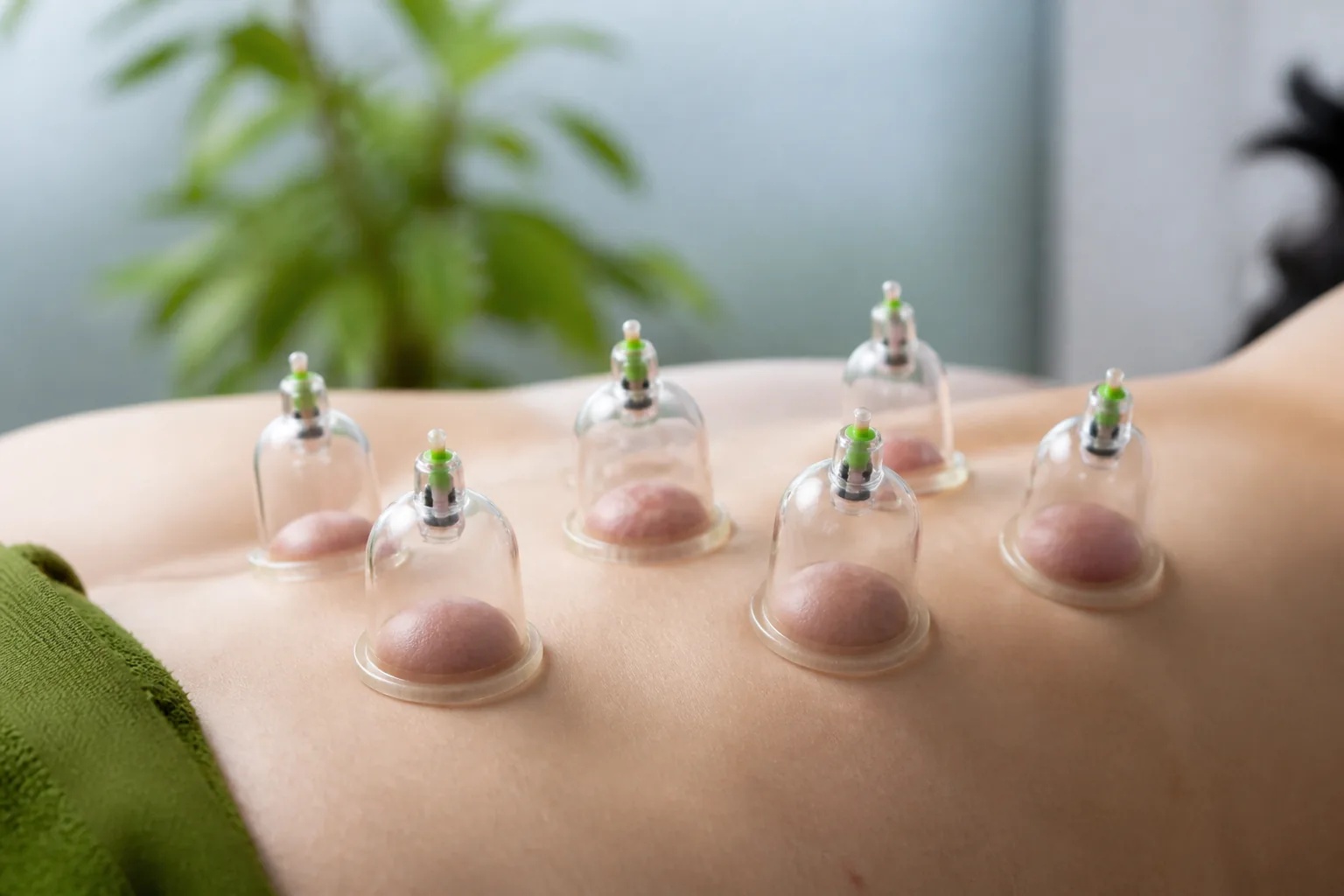
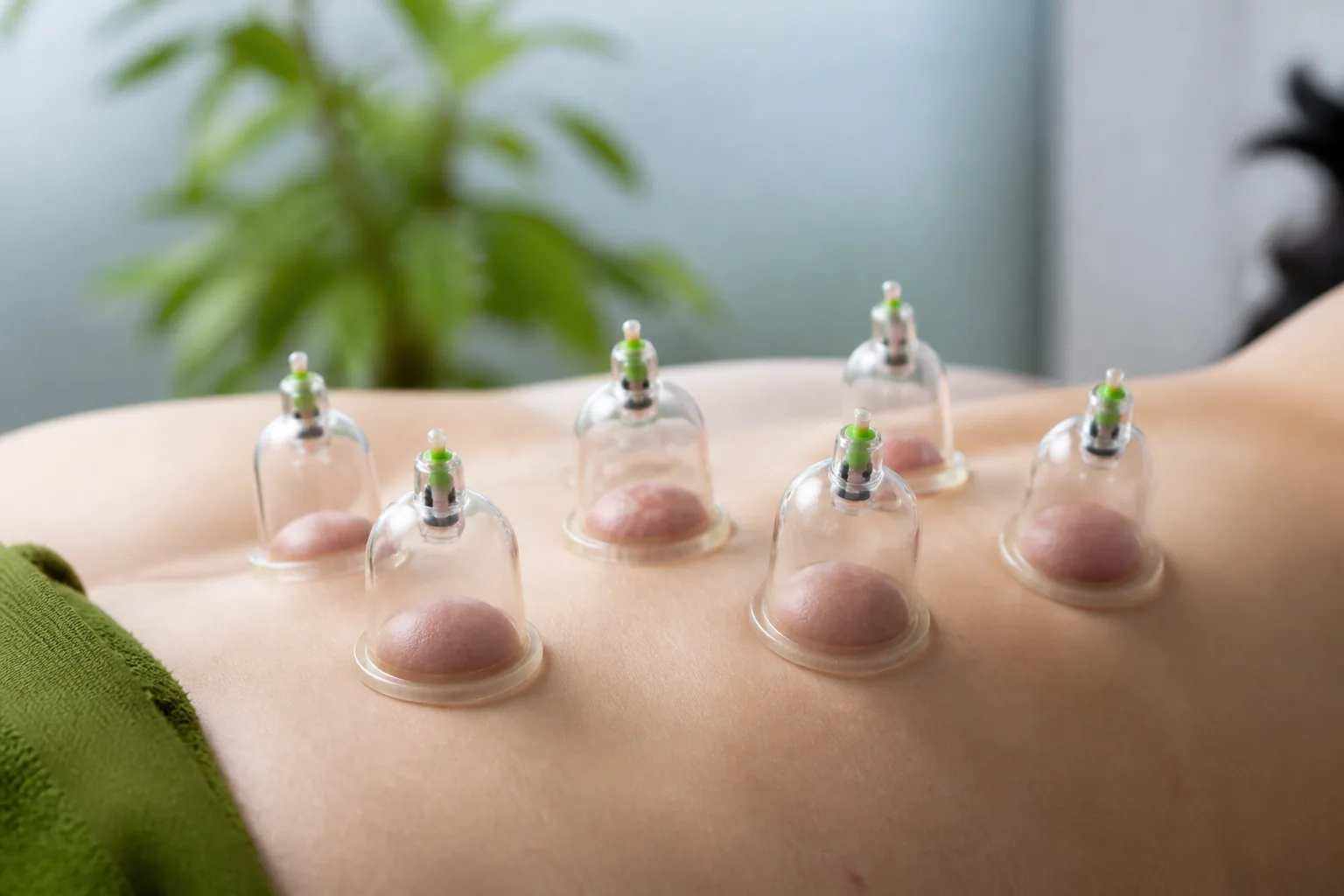
Cupping therapy uses cups placed on the skin to create suction, which gently pulls the skin and the tissue just beneath it upwards. It has long been part of Traditional Chinese Medicine (TCM) as a traditional Chinese cupping practice, and it is also used in some physiotherapy, massage and sports rehabilitation settings. Most people who look for it are hoping for help with muscle pain, stiffness or restricted movement.
The honest answer is that some studies report benefit, particularly for neck and back pain, but the overall quality of the evidence is limited. This guide explains the main types of cupping, how it is thought to work, what the circular marks do and don't mean, and what the research cautiously suggests, along with the safety questions worth raising before you discuss it with a qualified practitioner.
What is cupping, and how do dry, wet and fire methods differ?
At its simplest, cupping involves placing cups on areas such as the back, shoulders, arms or legs. These are usually glass or plastic, though bamboo, ceramic, metal or silicone are sometimes used. A vacuum inside each cup draws the skin upwards, and the cups are typically left in place for several minutes.
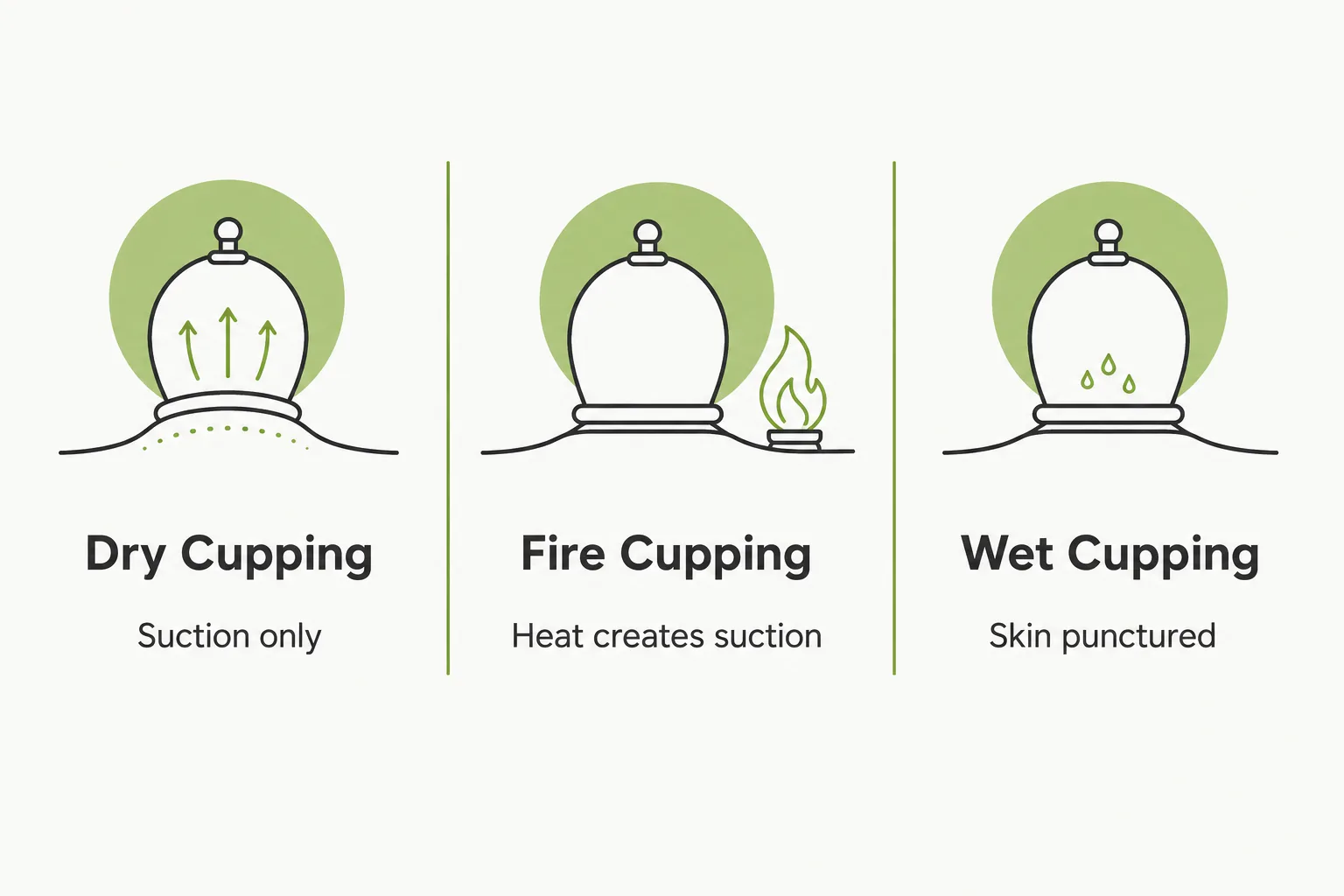
Dry cupping is suction alone, with no deliberate break in the skin. The vacuum can be created mechanically, with a hand pump or suction device, or by briefly heating the air inside the cup. That heating method is what people usually mean by fire cupping: the practitioner briefly introduces a flame into the cup, removes it and then places the cup on the skin, so that the cooling air creates suction. In other words, fire cupping is a way of producing suction rather than a separate treatment with its own claimed benefits.
Wet cupping is different, because the skin is lightly punctured or nicked before the cups go on, so that a small amount of blood is drawn into the cup. Since the skin is broken, wet cupping carries infection and scarring considerations that dry cupping doesn't, and it's easy to confuse with fire cupping even though the two are unrelated.
There is also moving, or running, cupping, where oil or lotion is applied first and the cups are glided over the skin, much like a massage stroke, which borrows from Chinese remedial massage techniques.
How is cupping therapy thought to work?
There are two broad ways of explaining cupping, and it helps to keep them separate. Traditional Chinese Medicine describes cupping in terms of encouraging movement and restoring balance in the body, for example by promoting circulation and easing stagnation, and this framing rests on the principles of Traditional Chinese Medicine, whereas biomedical research looks at what happens in the local tissues and nervous system. As Harvard Health Publishing puts it, exactly how cupping might work remains unclear.
The immediate physical effect is fairly simple: negative pressure lifts the skin and superficial tissues, stretching and deforming them. Sources describe this as drawing fluid and blood into the treated area and increasing local blood flow. That's a reasonable description of a local response, though on its own it doesn't establish wider health effects.
Some rehabilitation-focused writers propose that suction may help separate and loosen layers of fascia, the web of connective tissue that wraps around muscles, so that tissues glide over one another more easily. One review reported increased skin and muscle elasticity after cupping, which could plausibly support movement in some musculoskeletal problems.
A further idea involves the nervous system. Strong but non-painful sensations, such as the pull of a cup, may compete with pain signals on their way to the brain, a concept often called pain gating, and some sources also suggest cupping may raise pain thresholds or reduce sensitivity in irritated tissues. These are best understood as hypotheses or partial explanations; they may help explain local effects, but they may not account for every condition cupping is claimed to help.
Cupping marks meaning: what the circles do and don't tell you
The circular marks come from the suction itself. Pulling on the skin draws blood and fluid up to the surface and can rupture tiny blood vessels called capillaries, which leaves round red, purple or darker patches. They can look like bruises, but they aren't bruises in the usual sense of an impact injury; one medical source notes they are not true bruises that injure muscle fibres.
How a mark looks can vary with the strength of suction, how long the cup stays on, where it's placed, how sensitive your skin is and your individual response, and marks typically fade over several days to a week or two. If an area becomes increasingly painful, hot, swollen or red, produces discharge, or you develop a fever, it's sensible to seek medical advice.
You may hear that darker marks reveal toxins, stagnation or problems in particular organs. Some traditional practitioners do interpret mark colour as part of their assessment, but that is a traditional interpretation rather than an evidence-based diagnosis, so the colour of a mark shouldn't be read as proof of any specific disease.
Cupping therapy benefits: what does the evidence cautiously suggest?
Research on cupping has focused mostly on musculoskeletal pain, particularly back and neck pain, and on sports or movement-related discomfort. According to Harvard Health Publishing, a 2023 review found that cupping might provide some relief for several musculoskeletal and sports-related conditions, including neck and back pain. A 2022 review reported that wet cupping, though not dry cupping, was effective for low back pain, and smaller studies in athletes have reported improvements in hip and hamstring mobility and in perceived pain after treatment.
That said, the same 2023 review judged the quality of the evidence to be limited. Studies differ in the cupping technique used, the conditions treated, what cupping is compared against and how results are measured, which makes them hard to pool. It is also difficult to design a convincing placebo for cupping, so participants usually know whether they have received real treatment, and because pain is hard to measure and the placebo effect can be powerful, larger, well-designed trials are still needed.
Cupping has also been suggested for conditions such as high cholesterol, asthma, skin complaints, migraines and immune function, although these broader claims would need considerably stronger evidence than is currently available before any firm conclusions could be drawn.
Deciding whether cupping is suitable for you
A good practitioner should start by asking about your symptoms, medical history, medicines and the condition of your skin before placing any cups. During treatment most people feel a pulling or tight sensation rather than pain. Afterwards you may notice temporary marks and some mild tenderness, so keep the area clean, watch the marks as they fade, and seek advice if you see signs of infection or a burn, or if pain is severe or getting worse.
Cupping is generally considered low risk, but side effects can include the circular marks, soreness, itching or skin irritation, and occasionally tiredness, headache or nausea. Fire cupping can cause burns if poorly performed, and wet cupping adds risks of infection, scarring and, in some people, fainting. For these reasons cupping should only be carried out by a trained practitioner with good hygiene, especially where the skin is punctured.
Talk to your doctor before treatment, or avoid cupping, if you are pregnant; have a bleeding or clotting disorder or anaemia, or take anticoagulant or blood-thinning medicine; have significant cardiovascular disease, a pacemaker or seizures; or have broken, inflamed or infected skin, eczema or psoriasis in the area. The same applies if you have any other significant medical condition.
For some people with muscular pain or stiffness, a cupping therapy treatment at our clinic may be a reasonable complementary option to discuss with a qualified practitioner, used alongside conventional care. It does not replace a medical assessment, though, so unexplained, severe or worsening symptoms should be checked by a doctor first.
References
The Science of Fascia: How Cupping Therapy Enhances Mobility and Reduces Pain